Fame and public image
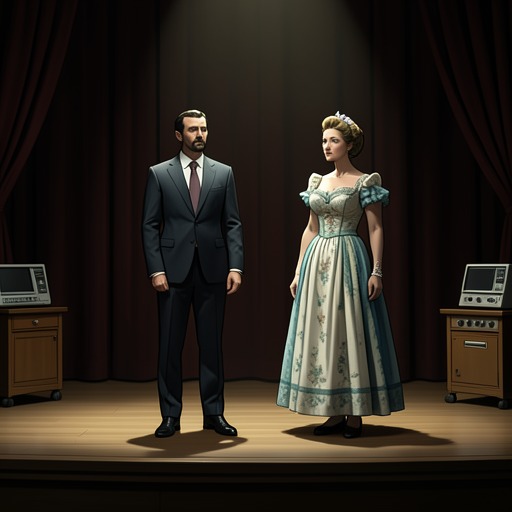
Cinder & EllaFame and public image shape both the professional life of Brian Oliver and the increasingly exposed life of Ella. The novel presents celebrity as a system of managed appearances: film executives and publicists script relationships for publicity, while audiences and online platforms amplify those scripts beyond the people’s control. What begins as a tool for selling films and constructing a star’s maturity eventually becomes a force that can injure private lives.
Public Image as Managed Property
Brian describes a life in which agents, managers, publicists, lawyers, image consultants, and trainers dictate what he may wear, eat, say, and attend. His promotional tour has already been planned without consulting him, and a schedule of interviews, photo calls, premieres, and radio and television appearances is presented as a route fixed in advance. His protest that his agreement seems irrelevant exposes the gap between being a famous person and possessing authority over one’s own public identity.
The machinery has a commercial logic. When a studio is preparing the film adaptation of The Druid Prince, the prospect of a successful release leads Brian’s representatives to consider a public engagement as a way to suggest that he is growing up and leaving youthful indiscretions behind. The proposal is not grounded in a private commitment: it is a promotional narrative designed to reassure teenage fans and cultivate a more mature image. Brian’s disbelief does not stop the room from treating the idea as strategically useful.
The proposed romance with Kaylee Summers is likewise framed as a business arrangement. Lisa argues that presenting the pair as genuinely in love could generate millions in additional publicity without additional expense, benefiting the film and Brian’s career. Brian rejects the notion that he can convincingly perform a real relationship with Kaylee, while Kaylee is eager to turn the arrangement into something larger. The contrast is central to the novel’s treatment of celebrity: an intimate bond can be valued by its publicity yield even when the people involved do not share the same feelings or intentions.
Staging Romance and Celebrity
The staged relationship becomes physically legible at the Ivy, where Kaylee chooses a highly visible Los Angeles restaurant for their first public “date.” Paparazzi recognize Brian’s car before it reaches the entrance and begin photographing them from half a block away. The scene makes the logic of celebrity performance concrete: the pair’s arrival is already a public image before they have sat down, and the photographers’ attention is part of what the outing is meant to produce.
Brian later insists that the engagement is false and resists Kaylee’s attempt to make their publicity plan seem like a real partnership. She points out that everyone assumes they are together and argues that their careers and shared plan depend on maintaining that impression. He proposes an amicable separation, reasoning that they can preserve favorable press without continuing the charade. Kaylee instead imagines the pair as a Hollywood power couple, capable of taking over the city through their combined influence. Brian recognizes the leverage they possess—he is Hollywood’s hottest newcomer, and Kaylee is the heir to the city’s largest studio—but does not want that power if it requires remaining a couple with her.
The arrangement nevertheless entangles him in real professional stakes. Kaylee’s father arrives with the celebrated director Zachary Goldberg, and Brian sees Kaylee and himself flattering one another while their access and influence become apparent. Goldberg’s presence offers Brian the possibility of working with a favorite director and playing a character he loves; it also deepens his concern that Kaylee will use their new power to keep him bound to the publicity relationship. The lure of career opportunity and the pressure of a false romantic image thus reinforce one another.
Private Friendship in a Public World
Brian’s anonymous online friendship with Ella complicates the image of him as a shallow playboy. He has never had a girl friend who was simply a friend and is unsettled by the possibility that Ella regards him only as an online companion. In three years, neither has asked for the other’s real name; Brian has withheld his identity because he does not know how to explain that he is Brian Oliver. Their first phone conversations alter the relationship, leaving him awkward and unsure in a way he has not experienced with girls before.
Ella’s judgment of his celebrity persona matters to him. He fears that his reputation as a womanizer will disappoint her, even as her refusal to admire that kind of behavior makes him proud of her. Wanting to show that he is more than the playboy she imagines, he tries to explain that Kaylee is prominent and connected to his boss’s family, as well as infatuated with him. The explanation registers the collision between his private motives and the public type he has been made to embody: Ella knows the reputation, but not yet the full story behind it.
The novel also shows that public attention can bring an audience to Ella’s work without immediately making her personal identity public. After Brian asks her to return to blogging, she posts a review of The Long Road Home, framed as an apologetic letter to him, and resumes writing about the casting of The Druid Prince. Brian welcomes her return in the comments, where they resume their playful disagreement about Princess Ratana’s costume. Readers join the discussion, and Ella’s comeback is greeted with affection. The blog’s return restores a valued part of her life, but it also creates a new channel through which Brian’s fame can magnify her visibility.
Attention as Amplification—and Exposure
Brian’s birthday tribute demonstrates how quickly celebrity attention can redistribute visibility. He publicly wishes Ella a happy birthday, calls her his favorite blogger and greatest supporter, praises her “words of wisdom,” and links to her review of The Long Road Home. He also shares posts from her series of sayings. Ella learns of the gesture at school from Vivian, who shows her the Facebook post; the attention helps explain the sudden looks, greetings, envy, and invitation to a party that had seemed mysterious.
The shift is measurable. Ella’s Twitter following rises from just over six thousand to more than twenty-five thousand in a day after Brian directs attention toward her. She has maintained separate email and social-media accounts for her blog and uses a separate mailing address for review copies, a practical effort to protect her private life while sustaining her online work. Brian’s gesture makes her writing newly prominent, and a girl he meets recognizes Ella as funny and says that she has begun following her. Publicity therefore creates real recognition and enthusiasm, not only danger; its reach, however, is no longer something Ella alone can manage.
That same reach turns hostile after Brian’s team circulates a false account of his relationship with Ella. Brian later acknowledges that the story about a charity project was fabricated, that Ella was not a fan, and that he was no longer engaged to Kaylee when he kissed Ella. He says that his team devised the account with Kaylee in a meeting he did not attend, despite his assistant’s warning that he would not approve it. The lie protects Brian’s reputation by offering the public a more convenient story, but it transfers the damage to Ella.
The following morning, Ella’s inbox is filled with hate mail, while her blog and social accounts collect cruel comments. Brian’s and Kaylee’s fans interpret her as a disturbed stalker who threatened their supposedly perfect couple. At school, the accusation takes another form: classmates call her a liar for supposedly claiming to know Brian, although she had never suggested that she knew him at all. Her friends Rob, Vivian, and Juliette accompany her into school and confront those who approach, but their presence cannot stop the jeers and insults.
Withdrawal, Accountability, and the Cost of Visibility
The consequences extend beyond the immediate scandal. Brian learns that Ella’s private identity has not leaked, but Kaylee has exposed her online identity. Ella deletes her Facebook and Twitter profiles, closes her email account, disables comments on her still-existing blog, and stops posting. Brian is relieved that three years of her writing have not disappeared, yet the surviving archive is a remnant of a connection she has made inaccessible: she has also removed the routes by which he could contact her. The distinction between a private name remaining secret and an online self becoming unusable shows how exposure can threaten a person without revealing every identifying detail.
Brian’s later account on Kenneth Long’s show marks a turn from managing the scandal to admitting its manufacture. He calls the charity explanation false, states that he had not been engaged to Kaylee when he kissed Ella, and identifies his own team and Kaylee as the people who devised the public story without his knowledge or consent. His attempt to correct the record comes after the lie has already reached Ella’s school, inbox, and social feeds; clarification does not undo the consequences of a publicity machine that can publish faster than its subject can respond.
In asking for help to find Ella, Brian also uses the same public attention that had harmed her, but now makes his purpose explicit. He says that he wants her as his companion to the premiere of The Druid Prince, the film that brought them together, and that he must find her even if she does not want to attend. He offers to date anyone who can tell him how to contact her, then points to a gift she left at the café as a way to identify someone who can help. His appeal reframes the film’s promotional spectacle around their shared history, while his insistence that the gift be returned acknowledges that Ella’s choice to withdraw does not erase what passed between them.
The recurring tension is not simply between fame and privacy, but between visibility controlled as a career asset and visibility experienced as a personal risk. Brian’s public image is shaped by executives, a romantic publicity plan, paparazzi, and later his own televised clarification; Ella’s audience grows through his endorsement, then turns into a network of accusation and harassment. The novel’s contrast between the affectionate birthday tribute and the hostile aftermath shows that online attention has no stable moral direction. It can make a writer’s work find readers, but fame cannot guarantee that those readers will distinguish a real person from the story constructed around her.